
Governance
Capital transactions restricted to authorized profiles, meetings locked once validated, allocations locked once the dividend is validated.
Module
Keep the shareholder base and share register of every company up to date, calculate actual ownership through your holding structures, convene your meetings and allocate dividends. Every step relies on the same, up-to-date data.
The problem
Features
Individuals, legal entities and families: contact details, a dedicated shareholder email, tax documents with expiry dates and bank accounts.
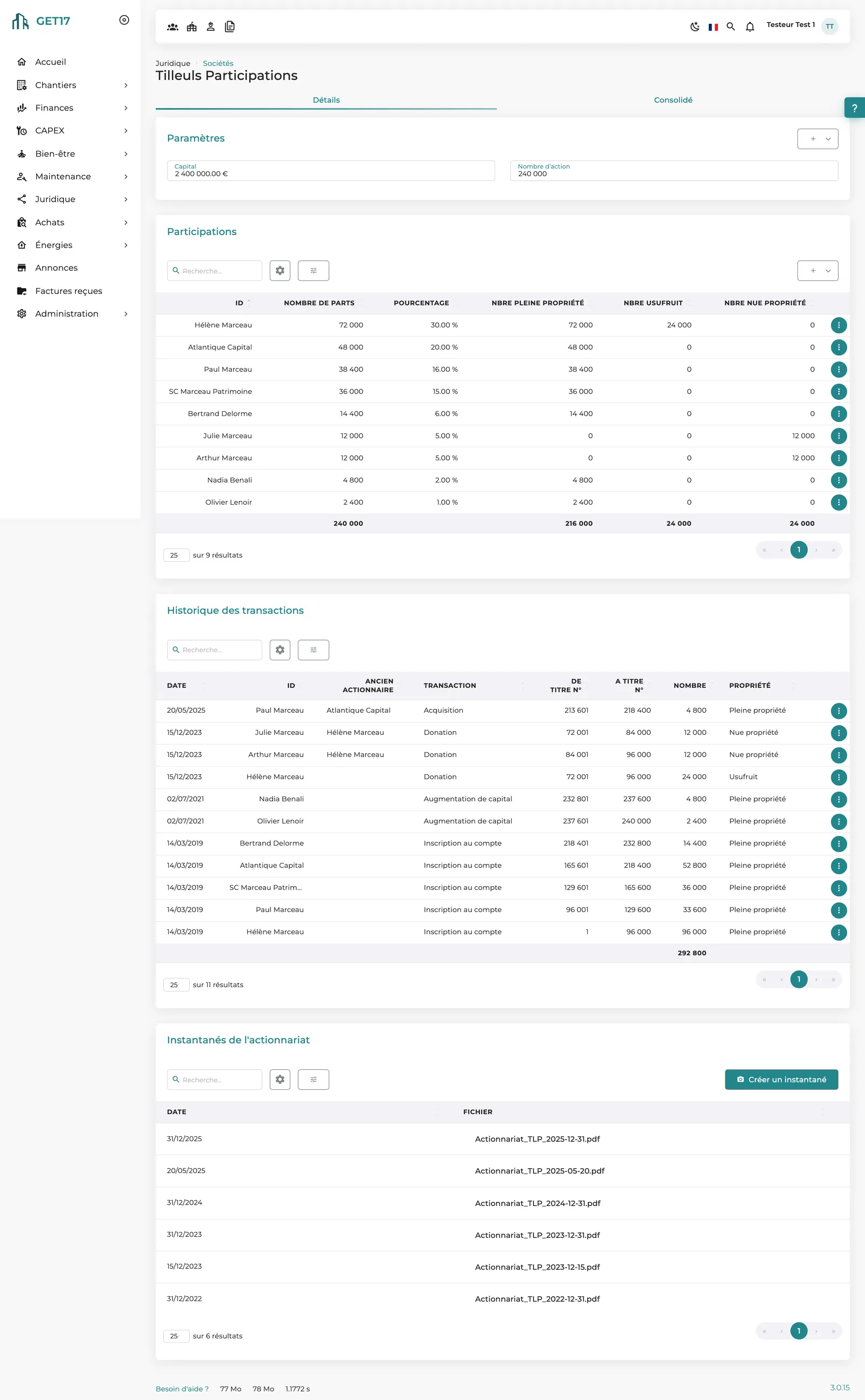
Registration, transfer, capital increase, gift: each transaction covers a range of share numbers, in full ownership, usufruct or bare ownership, and feeds the history.
A PDF snapshot of the capital breakdown on demand and automatically every December 31; export of the register and individual shareholder accounts.
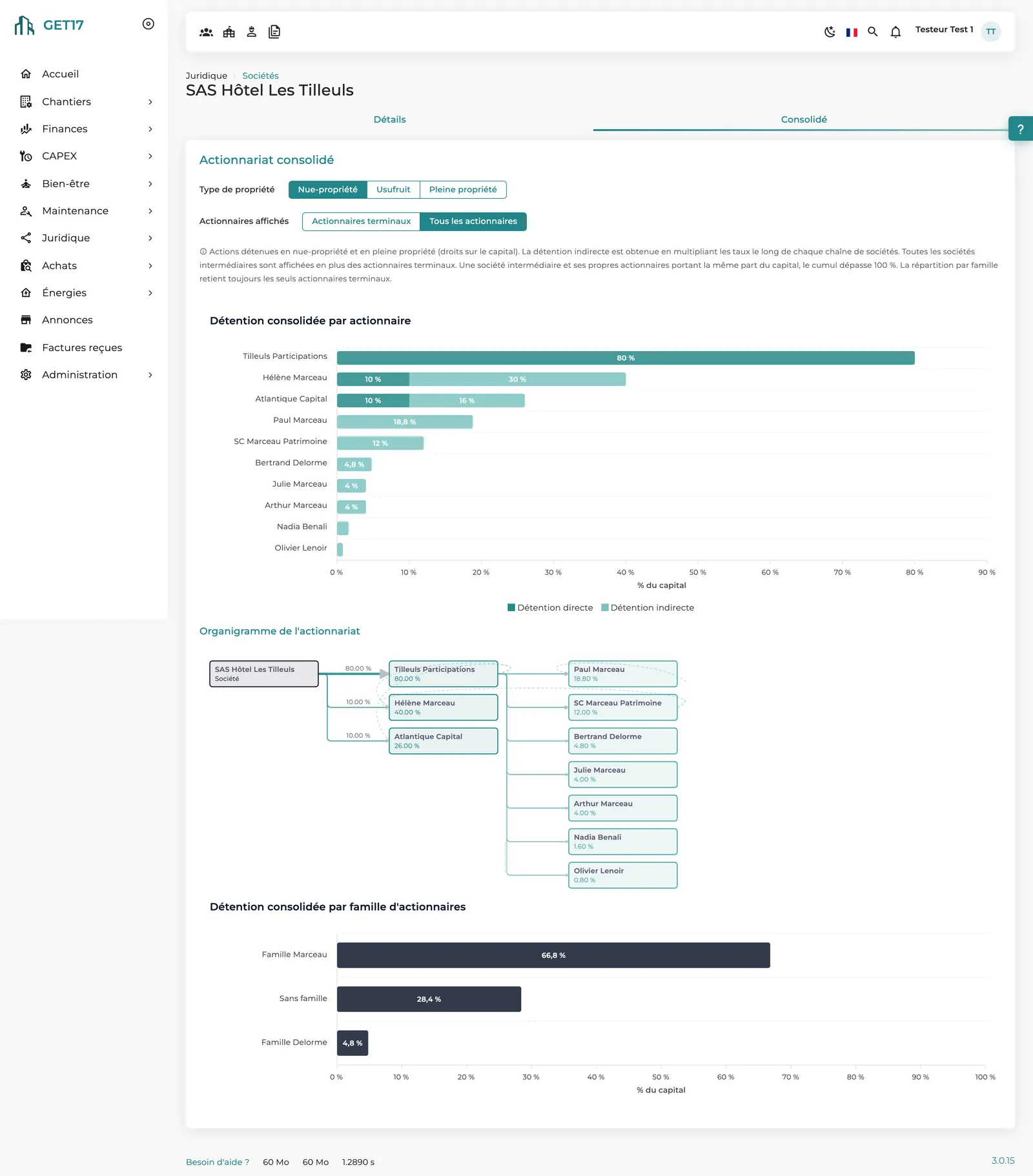
Actual ownership calculated through every holding company, by shareholder, company or family, with an organization chart of ownership chains.
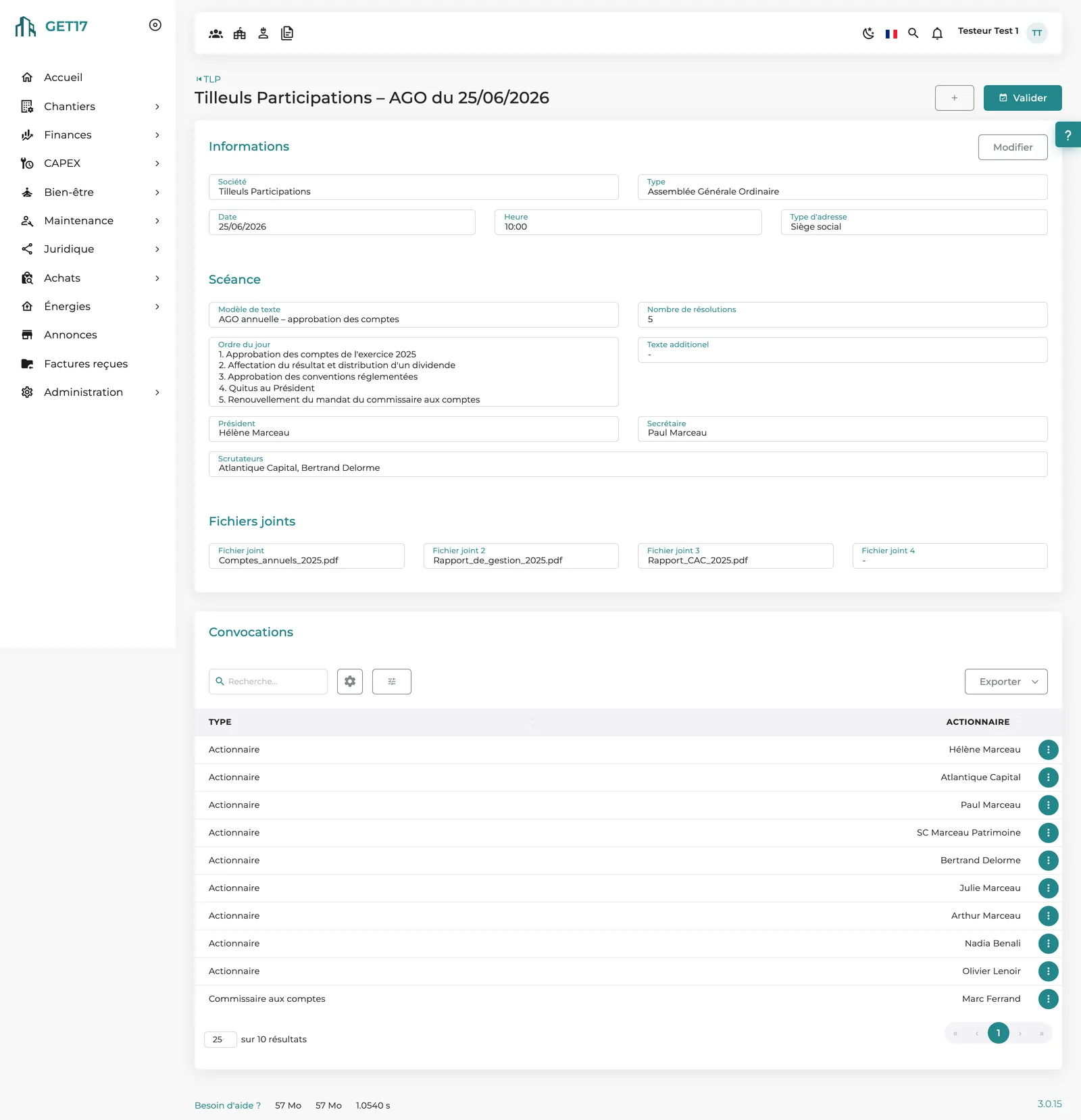
Meeting notice, proxy and voting form generated for each shareholder and for the statutory auditor, then emailed with up to four attachments.
Generated with the meeting from the current shareholding: name, address, shares held by type of ownership and a signature column.
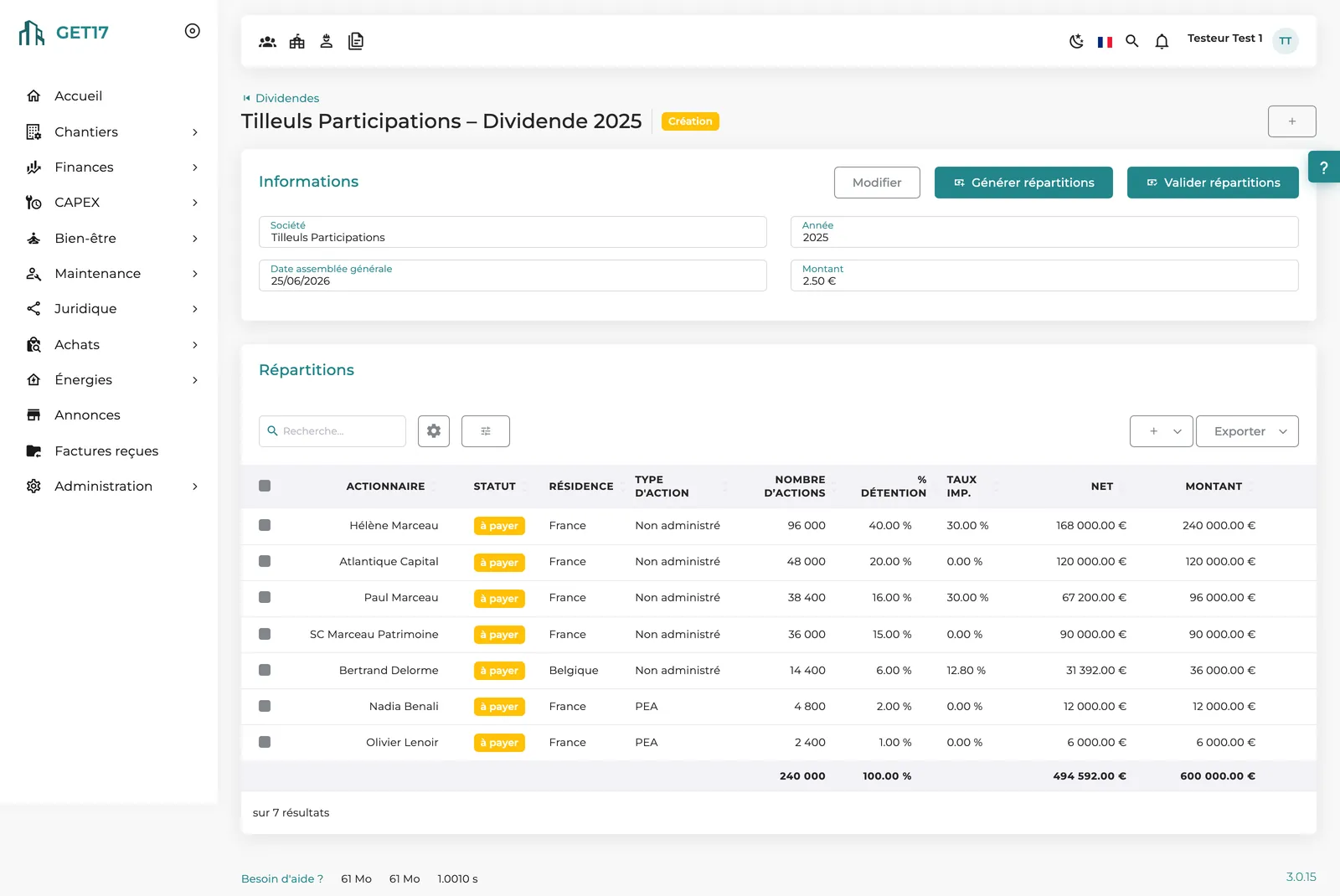
Allocation based on full ownership and usufruct, withholding tailored to each shareholder, individual payment notices and payment tracking.
A directory of auditors and their terms of office: they receive meeting notices, and terms due for renewal show up as tasks on the home page.
Legal representatives' terms with their renewal dates, property deeds (acquisition, sale, leasing) and co-ownership details for each asset.
The video
No voice-over; on-screen text in French.
How it works
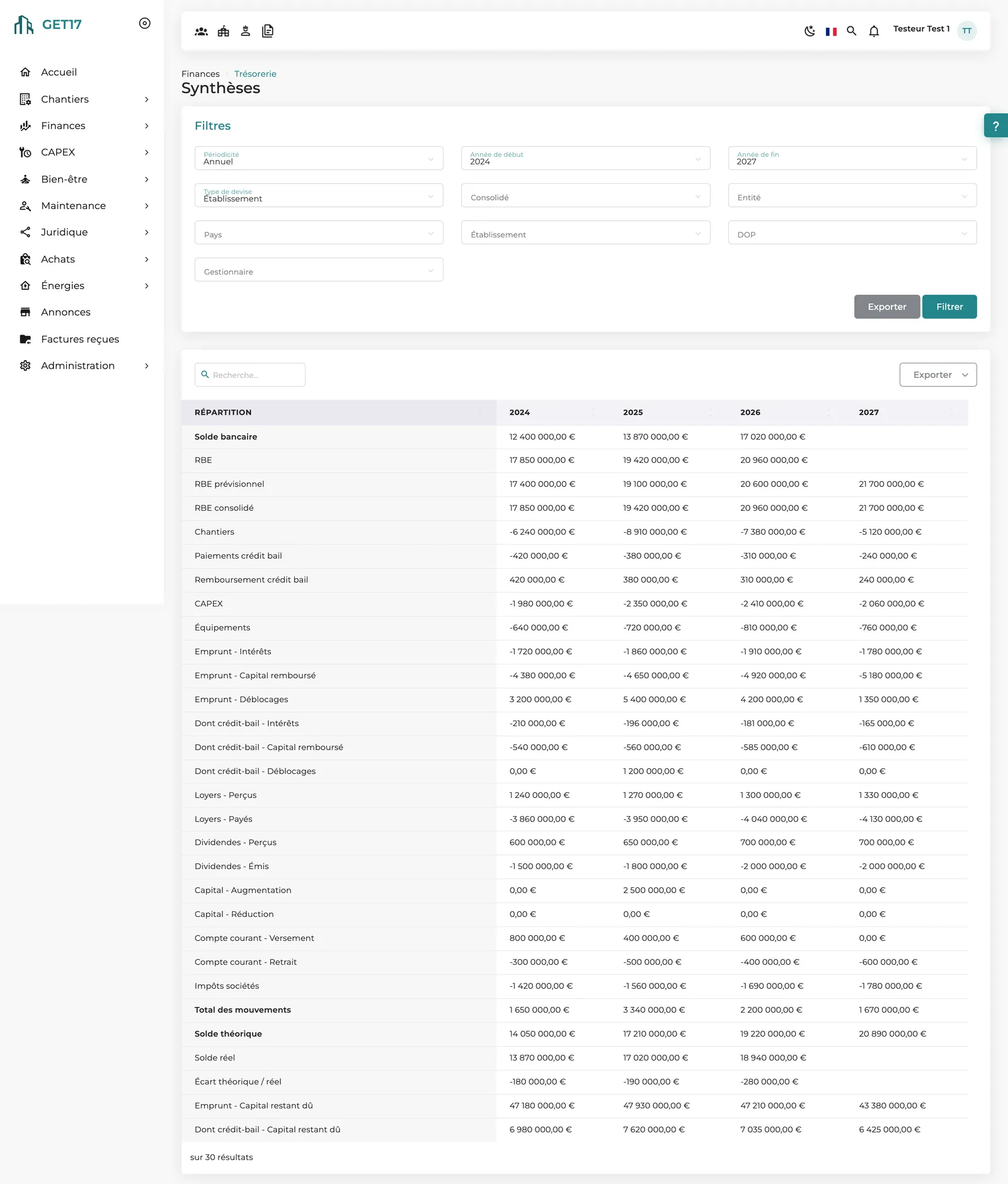
Shareholders, corporate shareholders and families sit in a single base, with their supporting documents.
Every share movement is recorded on a numbered range; percentages are recalculated.
Direct and indirect ownership is calculated through each holding company, up to family level.
Notices and the attendance sheet are generated; one click on “Validate” emails the notices.
The dividend is allocated among eligible shareholders; validation sends payment notices and feeds cash management.
Meetings to convene, dividends to generate, auditor terms to renew: deadlines show up as tasks.
On screen
Our approach
In GET17, shareholding isn't a static table: it's a register of numbered share lots, updated by every transaction. Meeting notices, attendance sheets, dividends and consolidated holdings all flow from it, with no re-keying.
Number ranges checked for gaps and overlaps, history built from transactions and dated snapshots: the register can be justified at any time.
Indirect ownership is the product of each link's percentage; a family adds up its members' holdings without double counting.
Bare owners are convened but excluded from dividends, withholding follows each shareholder, and validated dividends flow into group cash management.
What makes the difference
Capital transactions restricted to authorized profiles, meetings locked once validated, allocations locked once the dividend is validated.
Notices, proxies, voting forms, attendance sheets and payment notices are generated: you review instead of producing.
Meetings to convene, dividends to generate or validate, auditors to renew, tax forms to request: all appear as tasks on the home page.
XLS import of shareholdings, register and shareholder account exports, PDF snapshots, validated dividends carried into cash management.
Individuals or legal entities, French residents or not, shares held in a PEA: withholding follows each situation. Interface in 6 languages.
100% web, permission-based access, hosting of your choice and full control of your data: shareholding data stays with authorized people.
Frequently asked questions
They are convened to meetings, since they hold shares. However, only shares held in full ownership or usufruct carry dividend rights.
The withholding rate depends on their situation. For a non-resident company, it takes into account the tax treaty and the up-to-date documents on file (Form 5000, certificate of residence, parent company certificate); otherwise, the maximum rate applies.
No: it is generated with the meeting and downloaded for the session. The notices, with their attachments, are what gets emailed upon validation.
Yes, through an XLS import of each company's shareholding. The import replaces the holdings recorded for that company: it's designed for the initial migration, while one-off corrections are made directly on the company record.
No: they appear as tasks on the home page of the relevant users. Emails are reserved for meeting notices, payment notices and letters to shareholders.
No: validation sends the notices and locks the meeting. If the shareholding changes before sending, notices and the attendance sheet can be regenerated in one click.
Walk us through your group's ownership structure, and we'll show you how GET17 models it, from holding companies to dividends.